Tuesday, 18 March 2014

unwanted books


Does it happen to you to buy books and leave them unread, usually by placing them on a bookcase or on the floor with the other unread books? It seems that this habit is quite common. It was also my nightmare. 
Until this moment I had not realized that the "bulk purchase" of books couldn't give me a sense of feeling satiated. In books I was always looking for new worlds, adventures, journeys to unknown lands and distant planets, or unusual people. I was hungry of knowledge, words and still new impressions. But I wasn't memorizing these books, like I wasn't remembering  the movies which I watched or the trips what I made. Of course, the general impression usually remained but this wasn't what I was looking forward to. Now I know that I won't read all the books in the world so I try to choose them consciously. I don't visit a bookstore, if I haven't specific plans to purchase. And even if I see that appeared on the market some interesting  book, I'm not buying it until I finish all books already started. 

What are your experiences? Do you buy a book, even if you know that there is an off chance of reading it?


Simplicity is the ultimate sophistication.
Leonardo da Vinci

Sunday, 9 March 2014

The Great Beauty

Encouraged by a post on Oscars awards I decided to share with you my reflections on "The Great Beauty", the film which won in the category of Best Foreign Language Film. 

To the world of eternal parties and intensive nightlife introduces us the main character Gep Gamberdella - handsome, charming man, who despite the first signs of aging can fully enjoy the life. In youth he wrote a small novel, which achieved great success. Now, after 40 years, he realizes that his life fills the void, and the title's great beauty still remains out of his reach.

This film isn't only a story about the life of the so-called Roman's little world but expresses also a critisism of the current trends in the modern world. The director is trying to deal with the stereotype of Rome as the city constituting a cradle of mankind. In Sorentino's film Rome is nothing more than just a collectivity of persons deprived of their roots.

It is, however, in this story something magical, something that gives hope for the future. Maybe it's a secret of silence, what we forgot being surrounded by a constant chaos and pack of meaningless words? 

"The Great Beauty" is definitely worth seeing. I would sincerely recommend it to you. 


Sunday, 2 March 2014

Cittaslow - an unhurried city

logo of Cittaslow
In the era of the noise and haste was born a new movement which disseminates ideas different from those imposed on us by today's world. Cittaslow is is an international network of associated cities, and nonprofit organization whose objectives are: the improvement of the quality of life in small towns, the environmental protection, the cultural development and the promotion of regional products. This foundation tries to restore peace to the people and teaches how to live slowly, but creatively. The task facing the representatives of the cities which wish to be named cittaslow is primarily to find the identity of small towns and introduce solutions that make they will become self-sufficient. This kind of town can be found in Australia, Canada, the United States, South Africa, South Korea, China and Turkey; in Europe, the countries involved in the project are Germany, Spain, United Kingdom, France, Norway and Poland, but above all Italy, because there was born ​​the concept of the cittaslow movement. 

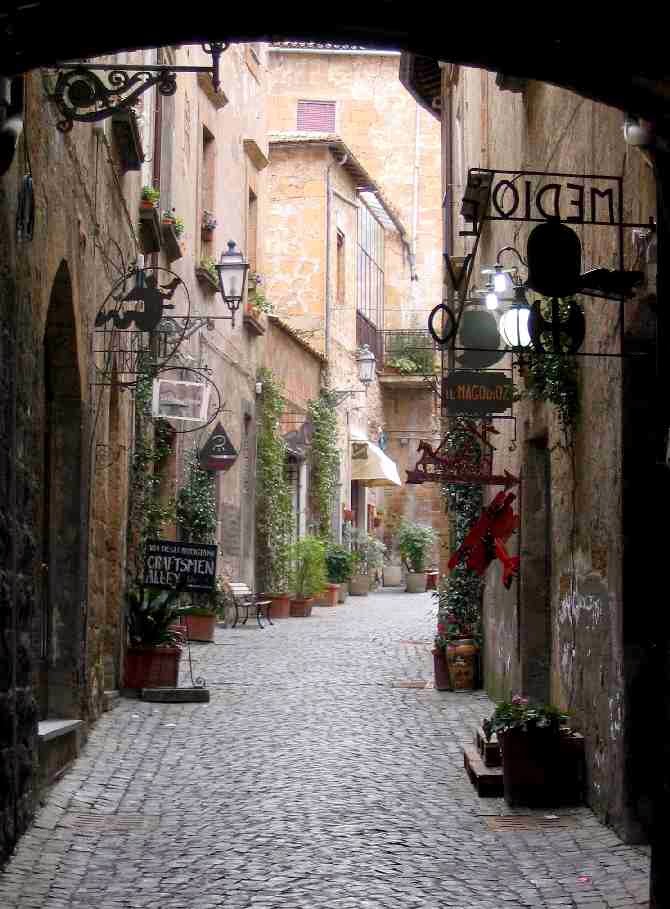
Orvieto
In October 1999, in the Umbrian town of Orvieto, held the first meeting of the representatives of the Italian cities wishing to join the newly formed organization. The coordinator and originator of the idea of ​​cittaslow was the mayor of Greve di Chianti - Paolo Saturnini. The inspiration was for him a philosophy of slowfood, movement created with the aim of  conservation traditional and characteristic for the given region cuisine. Looking at the history of the Italians, who managed to create a common state only in 1861, it is hardly surprising that they are so attached to local tradition and that they desire to protect them.

Poland takes the fourth place in the world in terms of  the number of slow towns. In Warmia and Mazury, where I was born, there are: Reszel, Ryn, Bisztynek, Biskupiec, Olsztynek, Nowe Miasto Lubawskie, Lidzbark Warmiński and Lubawa. By contrast there is only one slowcity in Wielkopolska which not belong to the land of a thousand lakes. It is called Murowana Goślina and it is situated 20 km from Poznań. One of the requirements that the city must meet if it want to join the "International Network of Cities Cittaslow" is a population no exceeding 50,000 of people. 

Reszel

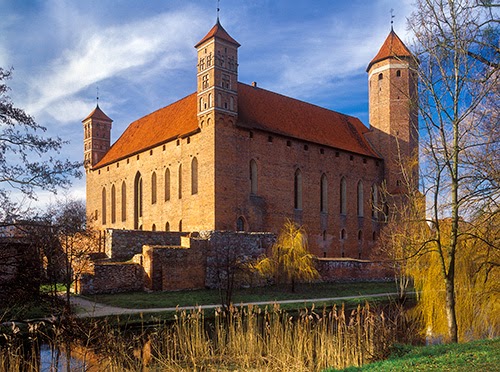
The most fascinating example seems to be Reszel, which is the architectural jewel of Warmia and Mazury. Its inhabitants call it the most beautiful city in the world, and in my opinion they aren't so far from the truth. Reszel is full of historical monuments and unique decorations, such as antique advertising signs or ubiquitous flowers. The city is also interesting because of its history,  there in 1811 burned at the stake last European "witch", Barbara Zdunk. Other cities that deserve attention are also Lidzbark Warminski, where we can admire the well-preserved medieval monuments such as the castle towering over the city with its beautiful cloister and Ryn, which is situated on two lakes. 

I really like this idea of ​​combine tradition with modernity. What do you think about this? Have you ever been in one of the cittaslow in Poland or in Italy? Waiting for your comments :) 
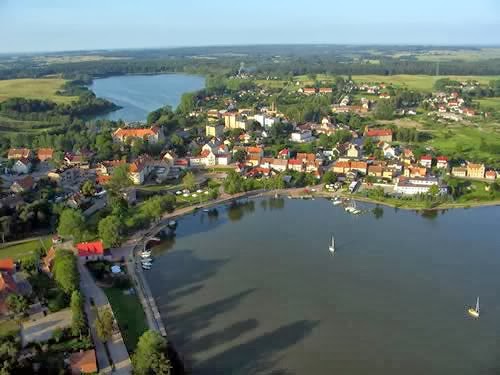


Ryn

Castle in Lidzbark Warmiński


Monday, 27 January 2014

Human attention is a commodity

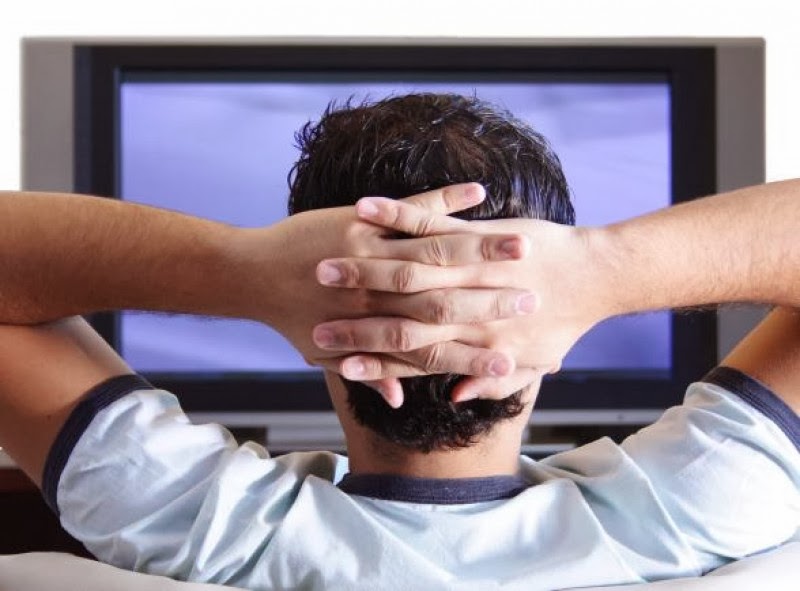
Have you ever imagined life without TV? Personally, I think that this device wreaks unbelievable havoc in a social fabric. I live without television channels for long time and there is nothing I lack. 

Try to consider what leads investors to finance projects which have so many flaws that should be legally prohibited, such as TV stations?  Answer: the possibility to land the only resource that is unique - human attention. For the "content" presented on TV we always have to pay - our attention.
If we have the resource limited in such a way, it means that we can't devote time to other purposes - our loved ones, parents, children, relatives. We can't sacrifice for the other activities - reading, writing, chopping wood, digging the garden, learning new things, going for walks, cooking, etc. Is called opportunity cost. Indeed, the cost is enormous, because human attention is indivisible, at least for men :) 


"People thought they are customers, in reality they are product"

Sunday, 26 January 2014

Accumulation of unnecessary things

One of the elements of the simple life is to reduce the number of items, with which we surround ourselves. Accumulation of material things is intended to provide a sense of security, is a sign of social status. We like to possess, to own. Contemporary world teach us that the acquisition and accumulation of wealth is an indispensable part of our earthly existence. In a culture focused on consumerism buying new things in more and more should be a recipe for a happy life. 

In fact, expanding the state ownership causes numerous problems - beyond the issued money, we have to have adequate space, take care of the items, clean them, repair, and protect against others. We buy things that we rarely use or use only a small percentage of their wide range of possibilities. We wast money, time and energy. But by reducing the state ownership we gain space in our homes and get rid of the considerable problems. When you don't have something, the only problem is that you don't have it :-) 
What do you think?

More about collecting things tells short film "The story of stuff", that I highly recommend.  


Monday, 20 January 2014

Studying...


It started ... the worst time in the life of a student. A lot of exams and always too little time to finish everything what was planned. Suddenly, it turns out that you have to make up for the absence, pass three tests in one week, and in addition, write a few words on your blog :-). The same situation is repeated every year after Christmas. Perhaps it would be wise to do some work during the holiday break...Whatever you say, I can't give up of the time spent with my family for the early preparation to the exam session. For me family and close friends are the most important thing in life and the attention dedicated to them make me fell wealth! 
What do you think about this? Do you study at Christmas? 


"Happiness is not the absence of problems, but the ability to deal with them"
Charles de Montesquieu


Sunday, 19 January 2014

Trojan horses in our homes

Today I  would like to describe a few things that are  great marketing tricks of the big companies, and which are designed to generate fixed costs in household budgets. 

One of the most significant Trojan horses are espresso coffee machines - the same coffee machine can be purchased for as low as 150 PLN! A real bargain! In one of the well-known Polish chain of stores ran out of them on the first day of sales ... The problem lies in the fact that the cost of one capsule is more than 1.5 PLN. So 100 coffees and we have the cost of the machine. In addition, we do not know what is in the capsule. Personally, I've tried coffee from this gadget : it tastes great! The problem is that it tastes better than coffee and coffee can't be.

What car dealers earn today - on loans, leases, insurances and services - on anything but not on new cars. Servicing new car is terribly expensive - replacement bulbs can cost 300 PLN and last even 40 minutes! Of course, the car is so designed to spoil immediately after the warranty. 

The same thing regards your household appliance. Washing machine, fridge, printer, mixer are deliberately constructed to broke down after the warranty. Additionally, they deteriorate in such a way that the repair  isn't profitable - is cheaper to purchase new appliance.

So, before you buy something ask yourself whether this kind of purchase would not entail further costs :)